
The Aura Breach Just Proved What I Tell Every Client: Nobody Is Immune
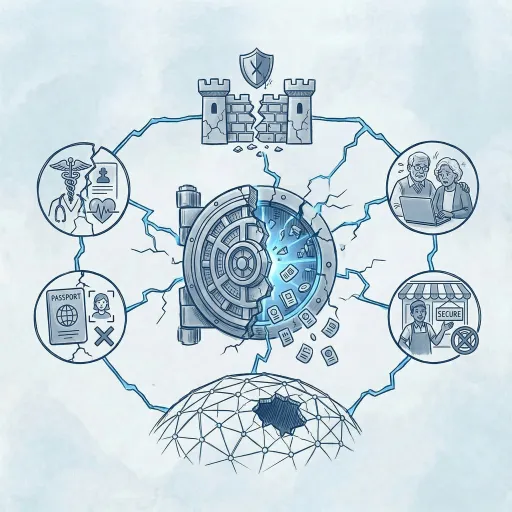
A client called me last week and asked a question I hadn’t heard before: “Paul, should I be worried that the company I’m paying to protect my identity just got hacked?” Honestly, it was a fair question, because in March 2026, a company that promises to stand between you and cybercriminals became the victim of a phishing attack, not a sophisticated exploit. Not a nation-state attack. A phone call. One convincing voice, one compromised employee, 900,000 records exposed. This should serve as a driver to reshape how you think about who you trust with your family’s digital safety.
What Actually Happened to Aura, and Why It Matters to You
Aura is a company that sells identity theft protection. Their business model represents the promise that they can stand between you and the criminals trying to steal your personal information. So when ShinyHunters, a prolific cybercriminal group, compromised roughly 900,000 records from Aura’s systems, it sent a shockwave through the personal cybersecurity industry.
The entry point wasn’t some sophisticated zero-day exploit or a weakness in Aura’s encryption. It was a phone call. An attacker contacted an Aura employee, impersonated a trusted party, and convinced them to hand over credentials. That’s it. A single conversation opened the door to a dataset containing names, email addresses, and for approximately 35,000 current and former customers, home addresses and phone numbers as well.
The breach data has since been indexed in the Have I Been Pwned database, meaning it’s now cataloged and searchable by anyone who knows where to look.
Why Voice Phishing Is Still a Significant Threat
The tactic used against Aura is called vishing, voice phishing, and it represents one of the fastest-growing attack vectors in cybersecurity today. Industry research tracked a staggering 442% increase in vishing incidents over the past year. Deepfake-enabled voice attacks surged even further, with some reports documenting increases exceeding 1,600% in early 2025 alone.
Here’s what’s changed: artificial intelligence has made it much easier to clone someone’s voice from a few seconds of publicly available audio such as a podcast appearance, a conference keynote, or even a voicemail greeting. An attacker can now call your assistant, your spouse, or your wealth manager sounding exactly like you. The pauses, the cadence, the inflection, all replicated with alarming fidelity.
This is why I tell Solace clients in Greenwich, Darien, Rye, and Scarsdale: One of the most dangerous cybersecurity threats to your family isn’t a piece of malware. It’s a convincing voice on the other end of a phone call.
What Data Was Exposed and What Wasn't
Aura has stated that the bulk of the 900,000 compromised records consisted of names and email addresses from a marketing tool the company acquired in 2021. A smaller subset, around 20,000 active customers and 15,000 former customers, had more detailed contact information exposed, including physical addresses and phone numbers.
Aura also confirmed that Social Security numbers, financial account details, and login credentials were not part of the breach. That’s a meaningful distinction. But here’s where my experience as a CISO makes me cautious about breathing too easy: contact data, when combined with information from previous breaches, gives attackers almost everything they need to build a detailed profile of you and your household.
Think of it this way. A criminal who knows your name, email, home address, and phone number can craft a phishing message that references your neighborhood, your recent Amazon delivery, or a service provider you actually use. That level of personalization is what transforms a generic scam into something that fools smart, careful people every single day.
ShinyHunters: Understanding the Threat Actor
ShinyHunters isn’t a lone wolf operation. This is a well-organized cybercriminal group with a documented history of high-profile breaches. They were behind the massive Snowflake breach campaign that hit major enterprises, and more recently, they’ve been running a sustained data theft operation targeting companies using Salesforce Experience Cloud, a campaign that reportedly compromised between 300 and 400 organizations.
Their playbook is consistent: breach a target, exfiltrate the data, and then extort the victim with the threat of public exposure. When Aura didn’t meet their demands, ShinyHunters listed the stolen data on their leak site.
For my clients, many of whom may sit on corporate boards, manage significant investment portfolios, or lead organizations of their own, understanding who these groups are and how they operate isn’t academic. It’s essential context for making informed decisions about your family’s digital protection strategy.
What the Aura Incident Teaches Us About Personal Cybersecurity
Every time a breach like this makes the news, I hear the same question from clients: “Should I be worried?” My answer is always the same, trade your worry for more preparation. Here’s what I recommend to anyone whose information may have been caught up in this incident, and frankly, to anyone who takes their digital privacy seriously.
Treat Every Unexpected Contact with Suspicion
If you receive a call, text, or email referencing Aura, your account status, or a “security incident,” do not engage. Attackers routinely piggyback on known breaches to launch secondary scams. They’ll impersonate the breached company, a credit bureau, or even law enforcement. Hang up. Navigate directly to the company’s website using a URL you type yourself. Verify it independently.
Rotate Your Credentials Immediately
Even though Aura says passwords weren’t compromised, attackers regularly pair newly leaked email addresses with credentials from older breaches. If you’ve reused a password across multiple accounts, and most people have, even those who know better, change them now. Use a reputable password manager to generate and store unique, complex passwords for every account.
Implement Multi-Factor Authentication Everywhere
Two-factor authentication remains one of the most effective defenses against account takeovers. But not all methods are equal. SMS-based codes are vulnerable to SIM-swapping attacks, a technique that’s particularly common against high-net-worth targets. I recommend hardware security keys or authenticator apps as your second factor, especially for financial accounts, email, and cloud storage.
Freeze Your Credit at All Three Bureaus
A credit freeze is free, takes minutes, and is hands-down the single most effective step you can take to prevent someone from opening new accounts in your name. Freeze your files at Equifax, Experian, and TransUnion. You can temporarily lift the freeze when you need to apply for credit and reinstate it immediately afterward.
Establish a Family Verification Protocol
This is something I recommend for every Solace client, and it’s directly inspired by the kind of vishing attack that hit Aura. Establish a verbal passphrase, something your family members and key advisors know, but that would never appear online or in any database. When anyone calls requesting sensitive information or an urgent financial action, the first step is always: verify with the passphrase. It’s extremely unlikely that an AI-cloned voice will know it.
Monitor the Dark Web for Your Exposed Information
Breached data doesn’t just disappear. It circulates, gets combined with other leaked datasets, and resurfaces in ways you don’t expect. Active dark web monitoring, not the watered-down version that sends you an alert six months after your data shows up, is a critical layer of defense for anyone whose personal information has been compromised.
Why Identity Theft Protection Alone Isn't Enough
I want to be direct about something. The Aura breach is an uncomfortable illustration of a point I make to every prospective client: buying a subscription to an identity monitoring service is not a cybersecurity strategy. It’s a single tool. And as we just saw, even the company selling that tool can be compromised.
Truly Personal Cybersecurity ™, the kind my team at Solace delivers to individuals and families across Fairfield and Westchester Counties, is a layered, proactive discipline. It encompasses device hardening, network security, social engineering awareness training for your entire household, dark web intelligence, secure communications, and ongoing threat assessment tailored to your specific profile and exposure.
You wouldn’t protect a $5 million home with just a deadbolt. Don’t protect your family’s digital life with just a monitoring subscription.
The Uncomfortable Truth About Digital Privacy in 2026
We’re living in an era where the volume of personal data floating around the internet is staggering. The average person’s information has been involved in multiple breaches over the past decade alone. For high-profile individuals, executives, entrepreneurs, public figures, that exposure is amplified by media appearances, corporate filings, property records, and social media.
The Aura breach added 900,000 more records to that ecosystem. But it also added something harder to quantify: a reminder that the companies promising to protect us are playing defense against the same sophisticated attackers as everyone else. And sometimes, they lose.
At Solace, we operate on the assumption that your data has already been exposed. The question isn’t whether you’ve been breached, it’s whether you’ve built the defenses to render that breach meaningless.
If you’re an executive, business owner, or high-net-worth individual in the Fairfield or Westchester County area and want to talk about what a tailored personal cybersecurity program looks like for your family, or if you have a cybersecurity emergency, my door is open. That’s what we do.
Stay vigilant.
-Paul
Dealing with a cyber emergency right now?
Don't wait. Every minute matters.
