What Are Account Takeover (ATO) Attacks and How to Stop Them
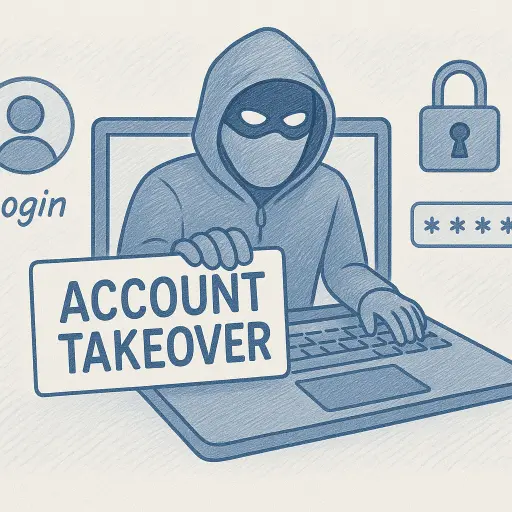
Account takeover (ATO) attacks are one of the fastest-growing cybersecurity threats in 2025. Cybercriminals hijack your online accounts—like email, banking, or social media—to steal money, data, or identity. These attacks can affect anyone, from individuals to major businesses. In this guide, you'll learn what ATO attacks are, how they happen, the damage they cause, and—most importantly—how to prevent and recover from them.
How Do Threat Actors Conduct an Account Takeover Attack
An account takeover attack is when a cybercriminal gains unauthorized access to your online accounts. Common targets include banking, email, social media, and shopping accounts. Attackers usually aim to exploit your data, steal money, or commit fraud in your name.
How Do Account Takeover Attacks Happen?
Attackers use several methods: 1. Phishing: Criminals send deceptive emails pretending to be legitimate entities, tricking you into providing passwords. 2. Credential Stuffing: Attackers automate login attempts using previously breached credentials obtained from the dark web. 3. Brute Force Attacks: Hackers systematically try numerous password combinations to gain entry. 4. SIM Swapping: Attackers transfer your phone number to their device, intercepting verification codes. 5. Malware: Malicious software captures keystrokes or steals stored passwords.
The Consequences of Account Takeover
An ATO attack can severely impact your life: • Financial Loss: Unauthorized transactions draining your bank accounts. • Identity Theft: Criminals using your personal data to open new accounts or commit fraud. • Privacy Invasion: Exposure of sensitive personal or professional information. • Reputation Damage: Misuse of your social media accounts to post harmful or embarrassing content.
Signs Your Account Has Been Compromised
Be alert to these red flags: • Unusual login notifications or activities. • Unexpected password reset notifications. • Unauthorized financial transactions. • Changes to personal information without your knowledge.
How Common Are Account Takeover Attacks?
Account takeovers are rapidly increasing. A 2024 cybersecurity report found:
• 2.2 million ATO Incidents in 2023.
• 3.1 million ATO Incidents in 2024 (41% increase YoY)
These rising numbers highlight the urgency of implementing effective prevention strategies.
Preventing Account Takeover Attacks
Follow these best practices: 1. Use Strong, Unique Passwords: • Avoid common passwords like “123456” or “password.” • Utilize password managers. 2. Enable Multi-Factor Authentication (MFA): • MFA adds an extra layer of security by requiring additional verification, such as an SMS code or biometric confirmation. 3. Stay Vigilant Against Phishing: • Never click on suspicious links. • Verify senders’ email addresses carefully. 4. Regularly Update Your Devices: • Frequent updates patch vulnerabilities and secure your devices against malware. 5. Monitor Your Accounts Regularly: • Keep an eye on account activity to quickly spot unauthorized access. 6. Secure Your Mobile Devices: • Use PINs or biometric locks. • Protect against SIM swapping by contacting your carrier to enable extra verification measures.

What to Do If You Suspect an Account Takeover Attack
Take these steps immediately if you suspect an ATO attack: 1. Change Your Passwords Immediately: Use strong, unique passwords. 2. Contact the Affected Institution: Report the incident to your bank, email provider, or social media platform. 3. Enable Multi-Factor Authentication: Activate MFA to add security. 4. Monitor Financial Statements: Check for unauthorized transactions regularly.
Real-Life Examples
• Twitter Breach (2020): Attackers gained access to high-profile accounts, tweeting cryptocurrency scams. Twitter attributed the incident to a coordinated phishing attack. • Capital One Breach (2019): An attacker exploited a misconfigured firewall to access millions of customer accounts, highlighting vulnerabilities beyond passwords alone.
Takeaway from Seeking Solace™
Account takeover attacks are evolving threats with potentially devastating consequences. Proactively securing your accounts, understanding the methods attackers use, and acting swiftly if compromised are essential for protecting yourself in the digital age.
Helpful Info on Account Takeover Attacks
About the author

Paul Pioselli is the Founder and CEO at Solace - Truly Personal Cybersecurity, a concierge cybersecurity firm based in Connecticut. Drawing on Fortune-15 executive experience and advanced technical expertise, Paul specializes in protecting individuals, executives, professionals, and families from online threats, digital fraud, and privacy breaches. His hands-on approach has helped clients recover from hacking incidents, strengthen their digital defenses, and regain peace of mind. Paul’s insights on personal cybersecurity and digital risk management have been featured in local media outlets ( 06680 Cyber Defense Magazine ) and community outreach programs across Greenwich, Westport, Darien and beyond. Recognized for translating complex security concepts into clear, actionable steps, he continues to be a trusted local authority on hacking prevention, identity theft protection, and scam recovery. Through Solace, Paul shares practical strategies that empower individuals to take control of their digital safety.
Have You Been Hacked?
Our dedicated Personal Cybersecurity Advisors are here to assist you.
Related Articles
How to Verify a Cybersecurity Company Is Legitimate

How to Hire a Cybersecurity Expert for Personal Protection