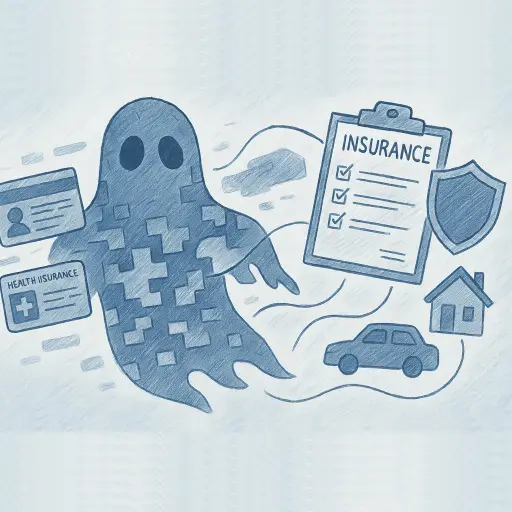
The Ghost in the Machine: How Cybercriminals Are Using Your Identity to Commit Insurance Fraud
For over two decades, I’ve helped individuals protect their digital lives. I’ve seen threats evolve from simple email scams to sophisticated, state-sponsored attacks. But one of the most insidious and fastest-growing threats I see today isn’t about stealing your identity wholesale—it’s about borrowing a piece of it to create a digital ghost. This threat is called synthetic identity theft, and criminals are now using it to target one of the most foundational pillars of your financial security: your insurance. You’ve spent a lifetime building your assets, your reputation, and your family's security. You have insurance for your home, your vehicles, your health, and your legacy. But what if a criminal could use a fragment of your identity—like your Social Security number—to create a completely new, fake person? A “synthetic” person who could then open insurance policies, file fraudulent claims, and leave you to deal with the chaotic aftermath of rising premiums, canceled policies, and a damaged reputation. This isn't science fiction. It's happening right now, and it’s a quiet threat that traditional identity theft monitoring services often miss. Let's pull back the curtain on how this works and, more importantly, what you can do to protect yourself.
What Exactly is Synthetic Identity Theft?
Think of traditional identity theft like a burglar stealing your wallet. They have your name, your cards, your driver's license and they are pretending to be you. Synthetic identity theft is different. It’s more like a master forger creating a brand-new passport using a real photo but a fake name and a stolen passport number. It’s a Frankenstein’s monster of data. Here’s the typical recipe a criminal uses: 1. A Real Social Security Number (SSN): This is the key ingredient. They often steal SSNs belonging to individuals who don't have established credit files, making them less likely to be monitored. This includes children, recent immigrants, or even the deceased. 2. A Fake Name and Date of Birth: They invent a name and birthdate, creating a person who doesn't exist in the real world. 3. A Controllable Address: They use a mailing address or P.O. box they control to receive documents. They combine these elements—your legitimate SSN with a fabricated name—to create a "synthetic identity." Because the SSN is real, it can often pass initial automated checks. The criminal then patiently builds a credit history for this fake person, applying for a store card here, a low-limit credit card there. Over time, this digital ghost starts to look like a real person to financial and insurance systems.
The New Frontier: Why Insurance is the Prime Target
For years, criminals used synthetic identities primarily for credit card fraud. But they’ve realized that the insurance industry is an even more lucrative target, for a few critical reasons: • Massive Payouts: A fraudulent auto accident or medical claim can yield tens or even hundreds of thousands of dollars—far more than a maxed-out credit card. • Long Detection Cycles: A criminal can create a synthetic identity, purchase a life insurance policy, and have it sit dormant for years before filing a claim. By the time the fraud is discovered, the trail is cold. • Complex Systems: The insurance ecosystem is a web of agents, adjusters, and third-party medical providers. This complexity creates gaps and blind spots that criminals are skilled at exploiting. The National Insurance Crime Bureau (NICB) isn't just ringing a warning bell; it's sounding a five-alarm fire. They project that identity theft-driven insurance fraud will spike by an astonishing 49% by the end of 2025. This isn't a distant threat; it's an immediate and rapidly escalating problem.
How the Scams Work in Practice
Let’s move from the theoretical to the tangible. Here are the most common ways criminals are weaponizing synthetic identities against the insurance industry: • Phantom Auto Accidents: A criminal ring creates multiple synthetic identities. They use these identities to get driver's licenses, register salvaged vehicles, and purchase auto insurance policies. They then stage an "accident" involving these phantom drivers and vehicles, file claims complete with forged police reports and medical bills, and collect the payouts. • Fraudulent Medical Claims: A synthetic identity is used to obtain health insurance. The criminal then colludes with a dishonest medical clinic to bill the insurer for expensive treatments and procedures that never happened. Because your SSN might be linked to this phantom profile, you could one day find false medical procedures listed in your health history, creating chaos for your future care. • Life Insurance Exploitation: This is the long con. As the NICB warns, criminals are using synthetic identities to take out life insurance policies. After paying premiums for a few years to avoid suspicion, they produce a fake death certificate and claim the payout. This can go undetected for years, a ticking time bomb linked to a stolen SSN. These aren't isolated incidents. We see cases like the one in Texas, where a man used his ex-wife’s identity to open an auto policy and pocket the payouts. While that was traditional identity theft, it showcases the ease with which insurance policies can be manipulated. The synthetic version is even harder to detect because there isn't a real person (the ex-wife) to notice the fraud right away.

The Real-World Impact: It's More Than Just a Number
So, a criminal uses a child's SSN and a fake name. Why should this concern you, a successful individual with a secure financial life? 1. Collateral Damage to Your Insurance Profile: If your SSN, or that of your child or grandchild, is linked to a synthetic identity racking up fraudulent claims, your "insurance risk profile" can become tainted. This can lead to inexplicably higher premiums for your own legitimate policies or, in the worst-case scenario, being denied coverage when you need it most. Imagine being turned down for long-term care insurance because an associated SSN has been flagged for fraud. 2. The Hassle of Exoneration: Proving you are not the person associated with a fraudulent claim is a bureaucratic nightmare. It involves police reports, affidavits, and endless phone calls with insurance fraud departments. It's a significant drain on your most valuable asset: your time. 3. The Risk to Your Legacy: For many, a key concern is ensuring their children and grandchildren are financially secure. A child's pristine SSN is the perfect raw material for a synthetic identity. Fraud committed today using their number can decimate their credit and financial standing before they even have a chance to build it.
Key Takeaways: The Synthetic Identity Threat to Your Insurance
Your Personal Cybersecurity Playbook: Proactive Defense
The unsettling truth is that you can't be 100% sure your information hasn't already been compromised in one of the countless data breaches. Therefore, the focus must shift from prevention alone to proactive detection and defense. Here is what I advise my clients to do: Level 1: Foundational Security • Freeze Your Credit, and Your Children's: This is the single most effective step you can take. A credit freeze restricts access to your credit report, which makes it much harder for criminals to open new financial accounts. You can—and absolutely should—do this for your minor children as well. Contact Equifax, Experian, and TransUnion to place a freeze for every member of your immediate family. It is free and can be thawed when needed. • Review Your Insurance Policies Annually: Don't just check the premium and file it away. Request a detailed summary of your policies (auto, home, life, health) and look for any anomalies. Are there listed drivers or insured individuals you don't recognize? Is the coverage what you expect? • Check Your "C.L.U.E." Report: Your Comprehensive Loss Underwriting Exchange (C.L.U.E.) report is like a credit report for insurance. It shows all the claims filed under your policies for the last seven years. You are entitled to a free report annually from LexisNexis. Review it for any claims you don't recognize. Level 2: Advanced Monitoring • Monitor Your Social Security Number: Set up an online account at ssa.gov and check your earnings record at least once a year. Look for any income reported from employers you don't know. This is a tell-tale sign that your SSN is being used for employment by a synthetic identity. • Question Unexpected Mail: If you (or your child) receive pre-approved credit offers, collection notices, or mail from a government agency you don't recognize, do not ignore it. This is a major red flag that a synthetic identity may be active. • Be Wary of Digital Onboarding: When signing up for new services, be cautious about how much information you provide. Not every field is mandatory. The less data you put out there, the less there is to steal. Level 3: Expert Guidance The threat landscape is complex and constantly changing. The steps above are excellent practices, but they are defensive. For those who have built significant wealth and have complex financial lives, a purely defensive posture is not enough. This is where a personal cybersecurity advisor becomes essential. An advisor moves you from defense to offense. They don't just give you a checklist; they help you implement it, monitor for unique threats tailored to your profile, and stand ready to manage the fallout if a compromise occurs. It’s the difference between having a map and having a dedicated guide to navigate treacherous terrain.
Next Steps: Your Action Checklist
Don't let this information overwhelm you. Turn it into action. Here is your checklist for the next 30 days. • [ ] Week 1: The Freeze. Go to the websites of Equifax, Experian, and TransUnion. Place a credit freeze on your own file, your spouse's, and your minor children's. • [ ] Week 2: The Review. Request and review your C.L.U.E. report. At the same time, log in to ssa.gov and review your earnings statement for inaccuracies. • [ ] Week 3: The Audit. Gather all your current insurance policies. Review every line. Verify all named individuals, listed properties, and vehicles. Question anything that seems amiss with your agent. • [ ] Week 4: The Conversation. Have a talk with your adult children about these risks. Encourage them to take the same protective steps for themselves and your grandchildren. • [ ] Ongoing: The Professional Dialogue. Consider your current cybersecurity posture. Is it based on a collection of apps and tips, or is it a cohesive strategy? This is the time to explore what a dedicated cybersecurity advisor could do to provide comprehensive peace of mind.
Your Security is Your Strength
For decades, the concept of security meant having a good alarm system and a safe deposit box. Today, the perimeter has changed. Your data, your identity, and your digital reputation are your new front door, and criminals are constantly checking to see if it's unlocked. The rise of synthetic identity theft targeting insurance is a sophisticated evolution of this threat. It’s quiet, complex, and attacks the very systems you’ve put in place to protect your family and assets. But it is not an unbeatable threat. By understanding the risk, taking decisive, proactive steps, and knowing when to seek expert guidance, you can fortify your defenses and ensure the legacy you've built remains secure for generations to come.
Frequently Asked Questions (FAQ)
Isn't my insurance company responsible for catching this type of fraud?
While insurance companies invest heavily in fraud detection, synthetic identities are designed to bypass their automated systems. These "ghost" identities look legitimate at first glance, and the fraud may not be discovered until a claim is filed, which could be years later. Relying solely on your insurer is a passive stance; personal, proactive defense is crucial.
How would I even know if a synthetic identity is using my information?
It's difficult, which is why it's such an effective scam. The most common signs are indirect: receiving mail (like credit card offers or bills) for someone you don't know at your address; getting a notice from the IRS about unreported income; or seeing your insurance premiums rise for no apparent reason. The best way to check is by proactively reviewing your credit, C.L.U.E., and Social Security reports.
I already have a credit freeze. Am I fully protected from this?
A credit freeze is the single best tool, but it is not a complete shield. It primarily prevents the opening of new credit accounts. A criminal could still use a synthetic identity to apply for a driver's license, get a job, or file fraudulent medical claims that might not trigger a credit inquiry. A freeze is a critical layer of defense, but not the only one you need.
Is my children's or grandchildren's information really at risk?
Yes, and they are arguably the primary targets. A child's SSN is a blank slate—no credit history, no associated addresses, and no one monitoring it. Criminals know this and prize these "clean" numbers. Protecting a child's SSN with a credit freeze is one of the most important financial security gifts you can give them.
What is the very first thing I should do if I suspect my (or my child's) information has been compromised?
Your first step is to place a credit freeze with all three bureaus (Equifax, Experian, TransUnion) immediately if you haven't already. Second, file a report with the Federal Trade Commission (FTC) at IdentityTheft.gov. This creates an official record and provides you with a personalized recovery plan. Then, begin the process of contacting the fraud departments of any implicated companies. Document everything in writing.
About the author

Paul Pioselli is the Founder and CEO at Solace - Truly Personal Cybersecurity, a concierge cybersecurity firm based in Connecticut. Drawing on Fortune-15 executive experience and advanced technical expertise, Paul specializes in protecting individuals, executives, professionals, and families from online threats, digital fraud, and privacy breaches. His hands-on approach has helped clients recover from hacking incidents, strengthen their digital defenses, and regain peace of mind. Paul’s insights on personal cybersecurity and digital risk management have been featured in local media outlets ( 06680 Cyber Defense Magazine ) and community outreach programs across Greenwich, Westport, Darien and beyond. Recognized for translating complex security concepts into clear, actionable steps, he continues to be a trusted local authority on hacking prevention, identity theft protection, and scam recovery. Through Solace, Paul shares practical strategies that empower individuals to take control of their digital safety.
Related Articles
How to Verify a Cybersecurity Company Is Legitimate
How to Hire a Cybersecurity Expert for Personal Protection