The Unseen Shield: How We're Quietly Winning the War on Deepfakes
If you're worried about what's real online, your concern is valid. The rise of deepfakes, highly realistic, AI-generated content has made it harder than ever to trust what you see and hear. From fake videos of CEOs causing stock market panic to sophisticated voice clone scams where a loved one seems to be pleading for money, these digital forgeries are a direct threat to our trust and financial security. For years, it seemed like an unwinnable fight. But the tide is turning in the war on deepfakes. A powerful new technology standard called C2PA - Content Provenance and Authenticity is now our best defense. Think of C2PA's Content Credentials as a digital "nutrition label" for online media, giving us a clear way to verify if a photo or video is authentic and unaltered. This guide will show you exactly how to spot deepfakes, understand the C2PA standard, and use these new tools to confidently navigate the digital world. This article will walk you through what you need to know about this new landscape, not with fear, but with clarity and confidence.
Table of Contents
The Deepfake Dilemma: Understanding the New Digital Forgery
Before we explore the solution, we must first understand the problem in personal terms. The term "deepfake" gets thrown around a lot, but what does it mean for individuals like you and your family?
What Exactly is a Deepfake? Beyond the Buzzword
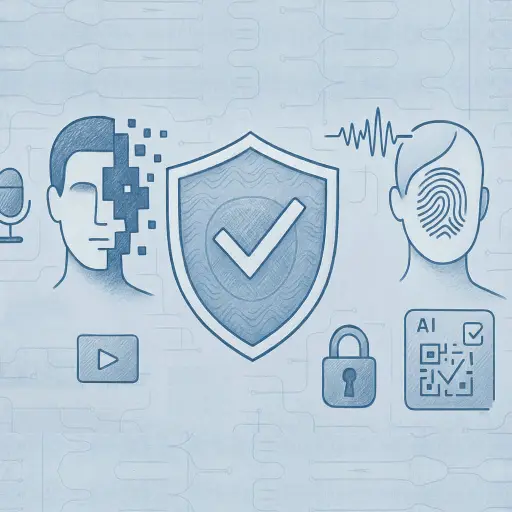
At its core, a deepfake is a piece of media - an image, a video, or an audio clip - that has been manipulated using artificial intelligence. Think of it like a digital sculptor who has studied thousands of photos and voice recordings of a person. The AI learns their every mannerism, the cadence of their voice, and the way light hits their face, enabling it to create entirely new content that is virtually indistinguishable from the real thing. While the technology is complex, the threat it poses is deeply personal and falls into three primary categories relevant to you: 1. Financial Deception: This is the most immediate threat. Criminals can use "voice cloning" technology to convincingly imitate a family member (a child or grandchild, for example) in a distress call, requesting an urgent wire transfer. They can also impersonate your wealth manager or banker, providing seemingly legitimate instructions over a video call to move funds. 2. Reputation Assassination: For individuals with a public profile, be it through business, board memberships, or philanthropy, the risk is severe. A malicious actor could create a video of you making inflammatory or compromising statements, releasing it strategically to damage your personal and professional reputation beyond repair. 3. Sophisticated Social Engineering: Cybercriminals are no longer just sending poorly worded emails. They can use deepfakes to impersonate a trusted colleague on a video conference to approve a fraudulent invoice or to mimic a family lawyer discussing a sensitive (but fake) legal matter to extract personal information. The common thread is the weaponization of trust. Deepfakes prey on our most human instincts to believe what we see and hear from those we know.

The Alliance Strikes Back: Introducing C2PA, Your Digital "Nutrition Label"
For every action, there is a reaction. As deepfake technology advanced, a coalition of the world's most influential technology companies quietly came together to build a defense. This is the Coalition for Content Provenance and Authenticity or C2PA, and its members include Adobe, Microsoft, Intel, Sony, and Nikon, among others. Their solution isn't to block or ban deepfakes - an impossible task - but to definitively and transparently label authentic content.
The Provenance Principle: A Familiar Concept
Think of the C2PA standard like the provenance of a fine work of art or the "farm-to-table" traceability of organic food. When you buy a valuable painting, its provenance is a documented history that proves its origin and ownership, guaranteeing its authenticity. C2PA brings this same principle to the digital world. It creates a secure, verifiable "digital birth certificate" for a piece of content, which then follows that content wherever it goes, documenting every change made along the way.
How It Works in Practice: The Journey of a Trusted Image
This "digital birth certificate" is called Content Credentials. It works by embedding a secure package of information (metadata) into a file at the moment of creation. Here’s the journey: 1. Capture: When you take a photo with a new C2PA-compliant camera from Sony or Nikon, the device cryptographically signs the image. This initial signature acts as a seal, confirming, "This image was captured by this specific device at this exact time and date." 2. Edit: If you then open that image in a C2PA-compliant program like Adobe Photoshop, any edits you make are tracked. When you save the file, a new layer of information is added, noting what changes were made (e.g., "color corrected," "cropped," or even "generative AI used to remove an object"). 3. Publish: Finally, when this image is uploaded to a C2PA-compliant social media platform or website, the platform can read this secure metadata. It will then display a small, clickable icon (often a "CR" symbol) on the content. When you click this icon, you see the content's full "nutrition label": its origin, the tools used to edit it, and a clear history of its journey.
What C2PA Means for Your Daily Life
This may sound technical, but its impact on your daily online experience is becoming profoundly simple and empowering. As this standard, rolled out in earnest through 2025, becomes ubiquitous, it will fundamentally change how you interact with information. A Tale of Two Videos Imagine two videos appear in your newsfeed, both claiming to show a local community leader making a controversial statement. • Video A has the small Content Credentials icon in the corner. You click it and see it was filmed on a Nikon Z9 camera yesterday, with no edits made since its capture. You can trust that what you're seeing is authentic. • Video B looks just as convincing, but it has no Content Credentials icon. Or, perhaps it has one, but when you click it, the history reveals it was heavily manipulated with AI tools. Your decision is now simple. The ambiguity is gone. C2PA provides the data, and you can make an informed judgment. It's not about censorship; it's about transparency.
Important Limitations: C2PA is a Shield, Not a Fortress
As your advisor, it's my duty to provide a complete picture. C2PA is a monumental step forward, but it is not a silver bullet. You must be aware of its limitations: • It Labels the Good, It Doesn't Erase the Bad: C2PA focuses on verifying authentic content. The absence of a C2PA label doesn't automatically mean something is a deepfake - it could have been created on an older device - but it does mean it lacks verifiable provenance and should be treated with a higher degree of skepticism. • Adoption is Key: The system's strength depends on widespread adoption by camera makers, software developers, and social platforms. While the momentum is enormous, it will take time for the ecosystem to become fully saturated. • Adversaries Will Adapt: Malicious actors will undoubtedly try to strip metadata or create counterfeit credentials. However, the cryptographic security behind C2PA makes this exceedingly difficult, akin to perfectly forging a modern passport.
Your Personal Strategy: Cultivating Digital Verification
Technology alone is never the whole solution. It must be paired with a vigilant and informed mindset. Here is how you can integrate the power of C2PA and other best practices into your personal cybersecurity posture.
Key Takeaways: Winning the Deepfake War
Deepfakes What It Is: AI-generated video, audio, or images that realistically mimic a person. What It Means For You: A direct threat to your finances (voice scams), reputation (smear campaigns), and data security (impersonation). C2PA What It Is: A "digital nutrition label" standard for content, showing its origin and edit history.What It Means For You: Empowers you to easily verify the authenticity of photos and videos from trusted sources, restoring clarity and trust. Content Credentials What It Is: The visible icon ("CR") and the verifiable history attached to a piece of content. What It Means For You: A simple, visual cue to look for. If you see it, you can check it. If you don't, be skeptical. Personal Vigilance What It Is: The human element of security; pairing technology with critical thinking.What It Means For You: The understanding that no tool is foolproof. Your judgment remains your most powerful defense.
Next Steps: Your Personal Action Plan
This checklist provides immediate, actionable steps you can take to protect yourself and your family. • [ ] Train Your Eyes: Starting today, begin actively looking for the Content Credentials ("CR") icon on images and videos as platforms roll it out. Make it a habit, just like checking for the "lock" icon on a website before entering payment information. • [ ] The Verbal Handshake: For any urgent or unusual financial request you receive via phone or video call—even if it sounds exactly like your loved one or advisor—hang up. Call them back on a phone number you personally have stored for them. This simple act foils nearly all voice clone scams. • [ ] Review Your Digital Footprint: The raw material for deepfakes is public data. Audit your social media profiles. Do you have extensive videos or audio clips of yourself publicly available? Consider tightening privacy settings to limit the source material available to would-be impersonators. • [ ] Educate Your Inner Circle: Share this information with your spouse, children, and close colleagues. Ensure they understand the threat of voice cloning and the importance of the "verbal handshake" protocol. A shared defense is a strong defense. • [ ] Seek Expert Guidance: The digital threat landscape is not static; it evolves continuously. Just as you rely on experts for financial and legal advice, a personal cybersecurity advisor is essential to proactively manage these complex and personal risks, tailoring a strategy for your unique situation.
Conclusion: A Future of Digital Clarity
The fear surrounding deepfakes is justified, but the notion that we are helpless is not. The C2PA standard represents a turning point, a powerful, collaborative effort to bake trust and transparency back into the fabric of our digital lives. It provides a technical foundation upon which we can rebuild our confidence in what we see and hear. But this technology is a tool, not a panacea. Your greatest asset remains your informed skepticism and your commitment to a proactive security mindset. By understanding these new tools, adopting simple verification habits, and securing your digital footprint, you are not just a potential victim; you are an active defender. You are taking control, and in this war for truth, that is how we all win.
Frequently Asked Questions (FAQ)
What is a deepfake in the simplest terms?
A deepfake is a fake video or audio recording created using artificial intelligence. It can convincingly show someone saying or doing something they never actually said or did, or perfectly mimic the voice of a person you know.
How does C2PA actually stop a deepfake from being made?
It doesn't. C2PA's strategy isn't to prevent the creation of deepfakes, but to make authentic content easily and reliably identifiable. By providing a secure "seal of authenticity" on genuine photos and videos, it allows you to quickly spot content that lacks this verification, making deepfakes much easier to dismiss.
When will I start seeing this C2PA "Content Credentials" icon everywhere?
You are likely starting to see it now in some places. Major companies began implementing the technology in late 2024 and throughout 2025. You will see it appear first on major news sites, social media platforms, and in images taken with the latest cameras from manufacturers like Sony, Nikon, and Canon. Widespread adoption will likely take a few years, but the rollout is actively underway.
Will this solve the entire online misinformation problem?
No, it is not a complete solution for all misinformation, which also includes out-of-context headlines, false narratives, and manipulated statistics. However, it is a massive step forward in combating the most visceral and deceptive form of misinformation: fake video and audio. It tackles the part of the problem that is most damaging to personal trust.
I'm not a public figure. Why should I be worried about deepfakes?
While public figures worry about reputation damage, the most common threat for private individuals is financial. Criminals use "voice clone" deepfakes to impersonate a family member in an emergency (the so-called "grandparent scam" on steroids) to trick you into wiring them money. They can also impersonate you to try and gain access to your financial accounts. It is a direct and personal threat.
About the author

Paul Pioselli is the Founder and CEO at Solace - Truly Personal Cybersecurity, a concierge cybersecurity firm based in Connecticut. Drawing on Fortune-15 executive experience and advanced technical expertise, Paul specializes in protecting individuals, executives, professionals, and families from online threats, digital fraud, and privacy breaches. His hands-on approach has helped clients recover from hacking incidents, strengthen their digital defenses, and regain peace of mind. Paul’s insights on personal cybersecurity and digital risk management have been featured in local media outlets ( 06880 Cyber Defense Magazine ) and community outreach programs across Greenwich, Westport, Darien and beyond. Recognized for translating complex security concepts into clear, actionable steps, he continues to be a trusted local authority on hacking prevention, identity theft protection, and scam recovery. Through Solace, Paul shares practical strategies that empower individuals to take control of their digital safety.
Related Articles
How to Verify a Cybersecurity Company Is Legitimate
How to Hire a Cybersecurity Expert for Personal Protection