The New Reality of Protecting Your Wealth: Integrating Personal Cybersecurity
For decades, protecting your wealth meant having a trusted financial advisor, a savvy lawyer, and a solid estate plan. You secured your home, stored valuables in a safe, and felt confident in the physical walls of your bank. But today, the greatest threat to your financial legacy isn't a market downturn or a physical burglary; it's a silent, invisible risk that lives in your email inbox, your smartphone, and the very networks that connect you to your financial institutions. A Personal Cybersecurity Advisor is imperative as part of your wealth management strategy. If you're an individual who has built a strong financial foundation, you are no longer just a random target for cybercriminals, you are the prime target. The unease you feel when hearing about data breaches, identity theft, and sophisticated online scams is justified. In 2023 alone, investment scams resulted in a staggering $4.57 Billion in losses in the U.S., a sharp increase that highlights how criminals are specifically targeting personal investments. You're right to be wary. The standard advice to "use a strong password" feels woefully inadequate, and you're unsure who you can truly trust to navigate this complex digital world. This guide was written for you. It's not about fear, it's about clarity and control. We'll move beyond the generic tips and explore how to seamlessly integrate cybersecurity into your financial strategy, treating it not as an IT problem, but as a core component of modern wealth preservation.
Table of Contents
Your Wealth Has a Digital Twin: The Inseparable Link to Cybersecurity
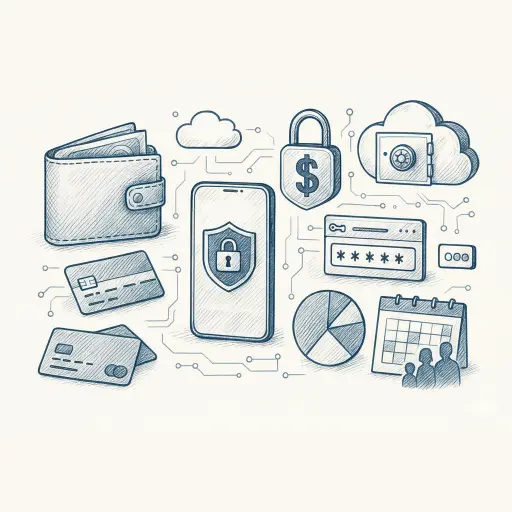
Think of your financial life like a physical estate. You have your home, your investment properties, and your tangible assets. But every single one of those assets also has a "digital twin". • Your bank accounts exist as data on a server. • Your stock portfolio is accessed through an online portal. • Your communication with your wealth manager happens via email. • Your property deeds might be filed and accessed electronically. This digital estate is just as real and far more accessible to criminals than your physical one. Every time you log in to view your balance, approve a transaction, or speak with your advisor, you are interacting with this digital twin. Protecting your wealth today is no longer just about safeguarding the physical assets; it's about securing the digital keys, credentials, and communications that control them. The lines have blurred completely -- your personal cybersecurity posture is your financial security posture.

The Modern Thief's Toolkit: Financial Threats You Can't Afford to Ignore
Cybercriminals targeting affluent individuals don't use scattered methods. They are patient, sophisticated, and do their homework. Their attacks are less like a random break-in and more like a meticulously planned heist.
Spear-Phishing: The Impersonator at Your Door
This isn't the clumsy "prince needs your help" email of the past. A spear-phishing attack is a custom-designed email meant only for you. Criminals will research you on social media and public records. They might know your wealth manager's name, the names of your children, or a recent vacation you took. The Scenario: You receive an email that appears to be from your financial advisor. It uses their exact email signature and a friendly, familiar tone. It references a recent market discussion you had and asks you to urgently approve a "time-sensitive" wire transfer for a new investment opportunity by clicking a link. The link, of course, leads to a fake portal designed to steal your credentials or authorize a fraudulent transfer. With over 298,000 phishing complaints filed with the FBI in 2023, it's clear this remains a primary gateway to financial ruin.
Investment & Real Estate Scams: The All-Too-Believable Opportunity
These scams prey on your desire to make smart financial moves. Criminals create fake investment platforms, promising exclusive access to pre-IPO stocks, cryptocurrency ventures, or high-yield real estate deals. They often use high-pressure tactics and create a sense of urgency and exclusivity. A particularly vicious variant is real estate wire fraud, where criminals intercept email threads related to a property closing and send false wiring instructions at the last minute, diverting your down payment or final funds to their own account.
Identity Fraud: The Long-Term Financial Assault
When criminals gain access to your personal information -- not just a password, but your Social Security number, date of birth, and financial history -- they don't just drain an account. They can open new lines of credit, file fraudulent tax returns, and even take out loans in your name. The total losses from identity fraud in the U.S. hit $23 Billion in 2023. For a high-net-worth individual, the cleanup isn't just a hassle; it's a protracted battle that can damage your credit, complicate your financial planning, and create legal chaos for years.
The Digital Estate Plan: The Missing Pillar of Modern Wealth Management
For generations, wealth management has rested on two pillars: 1. Financial Planning: Growing and managing your assets. 2. Legal Estate Planning: Ensuring the orderly transfer of those assets to the next generation. Today, there is a crucial third pillar: the Digital Estate Plan. This isn't just a list of your passwords. A proper Digital Estate Plan is a comprehensive strategy to secure your digital assets during your lifetime and ensure your loved ones can access and manage them if you are unable to. It answers critical questions: • Access: How will your spouse or executor access your online banking, brokerage accounts, and digital currency wallets without being locked out? • Security: How are these accounts protected right now with measures beyond a simple password? This includes multi-factor authentication (MFA), hardware security keys, and secure networks. • Continuity: Who is authorized to speak to your financial institutions on your behalf in a digital emergency? What is the protocol to prevent a fraudulent actor from impersonating a family member during a time of crisis? • Disposition: What happens to your digital assets, from cloud storage with sensitive documents to social media accounts, upon your death? Your financial advisor manages your money, and your lawyer drafts your will. But who is managing the security and continuity of the digital layer that connects them all? Without this third pillar, even the most brilliant financial and legal plans can be rendered useless by a single click.
Why Generic Cybersecurity Advice Puts Your Assets at Risk
The standard cybersecurity advice you read online is well-intentioned but fundamentally flawed for your situation. It's like giving the same architectural plans for a suburban home to someone building a fortress. Your threat landscape is entirely different. • You're a Target, Not a Statistic: Most advice is designed to protect against automated, widespread attacks. You, however, are a target of bespoke, human-operated attacks. Criminals will spend weeks, even months, researching you to find a single crack in your digital armor. • Your "Attack Surface" is Larger: Your digital footprint likely includes multiple residences, travel, family members, household staff, and connections to various corporate or foundation boards. Every person and every device connected to your life is a potential entry point that generic advice doesn't account for. • The Stakes are Higher: For many, a cyber incident is an inconvenience. For you, it can mean the loss of generational wealth, the compromise of your family's privacy, and a fundamental threat to your legacy. Using only basic tools like a simple antivirus program is like locking the front door of your estate but leaving the windows open, the gate unguarded, and the security codes written on a note by the phone. It creates a dangerous illusion of security.
The Personal Cybersecurity Advisor: Your Family's Digital Guardian
Given the unique risks you face, the solution isn't a piece of software; it's a trusted human relationship. A Personal Cybersecurity Advisor acts as the "Chief Security Officer" for you and your family. This is not an IT technician who fixes your printer; this is a strategic partner who integrates into your existing team of trusted advisors (financial, legal, tax). Here’s how a dedicated advisor provides the concierge-level security you need: 1. Bespoke Risk Assessment: They begin by conducting a confidential and comprehensive review of your family's entire digital life—from your network security and personal devices to your online habits and social media presence. 2. Strategic Security Plan: Based on the assessment, they create a customized security plan. This isn't a one-size-fits-all checklist. It might involve setting up a private, secure network for financial transactions, training family members on how to spot sophisticated scams, and implementing professional-grade identity monitoring. 3. Hands-On Implementation: Your advisor doesn't just give you a list of things to do; they manage the implementation for you. This includes setting up password managers, configuring hardware security keys, securing mobile devices, and ensuring your home networks are fortified. The goal is maximum security with minimal disruption to your life. 4. Coordination with Your Team: They liaise directly with your wealth manager to establish secure communication protocols and with your attorney to integrate the Digital Estate Plan into your legal documents. This closes the dangerous gaps that often exist between these professional silos. 5. 24/7 Incident Response: If a threat emerges, you have a single person to call. Your advisor is your first responder, able to immediately assess the situation, take steps to mitigate damage, and navigate the complex process of recovery—a far cry from waiting on hold with a generic tech support line. This is the essence of a Truly Personal Cybersecurity™, concierge approach. It's about having an expert in your corner who understands your life, your finances, and the unique digital risks you face, providing you with the ultimate peace of mind.
Key Takeaways from Solace
Concept
Why It Matters for You
Your Wealth Has a Digital Twin
Every financial asset is controlled by digital credentials. Securing these is paramount.
You Are a Prime Target
Criminals use sophisticated, personalized attacks (spear-phishing) to target your assets.
The Digital Estate Plan is Crucial
It's the third pillar of wealth management, ensuring security now and access for your heirs later.
Generic Advice is Inadequate
Your unique risk profile requires a bespoke security strategy, not one-size-fits-all tips.
A Personal Advisor is the Solution
You need a dedicated expert to manage your digital security with the same care your advisor manages your portfolio.
Your Action Plan: Next Steps to Secure Your Financial Future
Taking control of your digital financial security can feel overwhelming. Here is a simple checklist to get started. Step 1: Initiate a Conversation. The next time you speak with your wealth manager or estate planning attorney, ask them this question: "How are we incorporating a dedicated cybersecurity and digital estate plan into my overall financial strategy?" Their answer will be very telling. Step 2: Conduct a Simple Credential Audit. Make a private list of your most critical financial accounts (primary bank, brokerage, retirement). Do any of them use the same—or similar—passwords? Do they all have multi-factor authentication (MFA) enabled? This is a quick way to gauge your immediate vulnerability. Step 3: Review Your Digital Footprint. Google your own name. What information is publicly available? Criminals use this information to craft believable scams. Consider limiting public access to social media profiles. Step 4: Schedule a Confidential Consultation. Seek out a professional Personal Cybersecurity Advisor. A no-obligation conversation can help you understand your specific risks and what a truly personalized security plan would look like for you and your family.
From Concern to Confidence
Integrating cybersecurity into your personal finances is no longer optional; it is the cornerstone of responsible stewardship in the 21st century. The threats are real and sophisticated, but they are not insurmountable. By shifting your perspective from seeing cybersecurity as a technical chore to viewing it as an essential element of wealth preservation, you can move from a state of understandable concern to one of empowered confidence. You have spent a lifetime building your legacy. Protecting it requires a modern approach—one that secures both your physical and digital estates with equal diligence. By taking deliberate, informed steps and engaging the right expertise, you can ensure that the wealth you've created is safe for generations to come.
Frequently Asked Questions (FAQ)
1. Isn't my bank or financial advisor responsible for my cybersecurity?
While financial institutions have robust security for their own systems, they are not responsible for your personal security. If your credentials are stolen from your personal computer or through a phishing email, their security measures can be bypassed. Their responsibility is to protect their "vault," while your responsibility is to protect the "key" (your login credentials). A personal cybersecurity advisor helps you protect your key.
2. I'm not very tech-savvy. Is this going to be too complicated for me?
Not at all. A key role of a personal advisor is to handle the complexity for you. We use a concierge approach, meaning we manage the technical implementation and explain everything in simple, clear terms. The goal is to make you secure without making your life more complicated.
3. What's the difference between a personal cybersecurity advisor and just buying antivirus software?
Antivirus software is a single tool, like a smoke detector. It's helpful for one specific thing (detecting known malware), but it doesn't protect you from sophisticated phishing, identity theft, or scams. A personal advisor is like your home's entire security system designer and operator. They build a comprehensive strategy, use a variety of professional-grade tools, and provide human oversight and incident response—a complete, managed solution.
4. How do I find and vet a trustworthy Personal Cybersecurity Advisor?
Look for individuals or firms that specialize in working with high-net-worth clients and can demonstrate deep experience in both cybersecurity and the financial sector. They should operate with the utmost discretion and be able to provide references from other professionals, such as wealth managers or attorneys. A trustworthy advisor will focus on a long-term relationship, not on selling you a single product.
5. My children or grandchildren help me with my technology. Isn't that enough?
While it's wonderful that your family helps, they are not cybersecurity professionals. They may be tech-savvy, but they are likely not trained to identify the sophisticated, targeted threats aimed at individuals of significant wealth. They also may not be thinking about the crucial elements of a Digital Estate Plan. Professional-level protection requires professional-level expertise, just like financial management does.
About the author

Paul Pioselli is the Founder and CEO at Solace - Truly Personal Cybersecurity, a concierge cybersecurity firm based in Connecticut. Drawing on Fortune-15 executive experience and advanced technical expertise, Paul specializes in protecting individuals, executives, professionals, and families from online threats, digital fraud, and privacy breaches. His hands-on approach has helped clients recover from hacking incidents, strengthen their digital defenses, and regain peace of mind. Paul’s insights on personal cybersecurity and digital risk management have been featured in local media outlets ( 06880 Cyber Defense Magazine ) and community outreach programs across Greenwich, Westport, Darien and beyond. Recognized for translating complex security concepts into clear, actionable steps, he continues to be a trusted local authority on hacking prevention, identity theft protection, and scam recovery. Through Solace, Paul shares practical strategies that empower individuals to take control of their digital safety.
Related Articles
How to Verify a Cybersecurity Company Is Legitimate
How to Hire a Cybersecurity Expert for Personal Protection