TransUnion Data Breach, 4.4M US Consumer's Affected: Your Next Steps
This guide explains what happened in the TransUnion data breach and gives clear, prioritized actions to help prevent Identity Theft, especially for individuals, executives, and professionals in CT, NY, and MA who face elevated risks. We’ll compare credit freezes, fraud alerts, and monitoring so you can choose the right protection under your Personal Cybersecurity plan.
What Happened & Why it Matters
TransUnion says attackers accessed a third-party application used for U.S. consumer support on July 28, 2025; the company detected the incident two days later and is notifying 4,461,511 people in the U.S. A separate state filing confirms stolen names, dates of birth, and Social Security numbers. TransUnion also says no core credit reports were accessed. Early reporting links this incident to a wider data-theft campaign against Salesforce customers; some outlets attribute activity to the threat actor group, ShinyHunters. While the story and information on the culprits are still developing, the defensive playbook below remains the same.
Who is at Higher Risk in Our Community: CT, NY and MA
All individuals, including executives and professionals in Connecticut, New York, and Massachusetts are prime targets for new-account fraud and well-researched phishing attacks. Dense financial hubs, public licensing databases, and media mentions make it easier for criminals to tailor their scams.
Are You Affected?
How TransUnion will notify you TransUnion is sending written notices by mail and offering 24 months of free credit monitoring. Keep the letter as it includes enrollment instructions and support details. What to look for in the letter Expect language noting a “cyber incident” involving a third-party application and clarifying that no credit report was accessed. Save the enrollment code and the support phone and email contact information provided.
Action Plan that Works
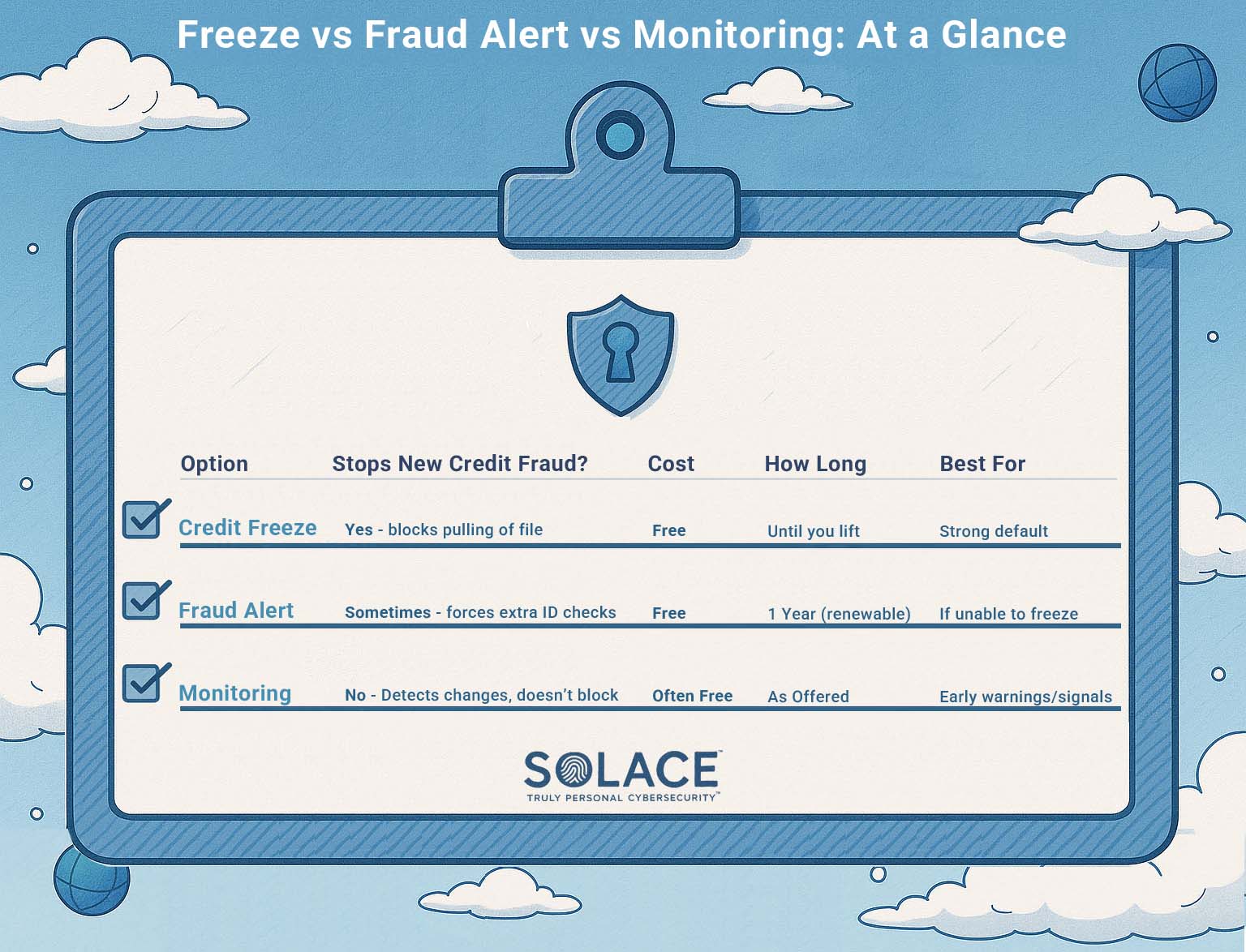
A credit freeze is the strongest protection against new-account fraud, and it’s free by law. You can place or lift it with each bureau as needed.
Take Action Today Checklist (10–20 minutes)
• Place a credit freeze at all three bureaus (TransUnion, Equifax, Experian). It’s free and reversible when you need credit. • Add a 1-year fraud alert if you prefer lighter friction or while coordinating freezes for family. • Enroll in TransUnion’s offered monitoring (it’s additive, not a substitute). Keep the letter’s code handy. • Change passwords for email, banking, and cloud services. Turn on multi-factor authentication everywhere. • Enable transaction alerts on bank/credit cards; review statements weekly. • Pull your credit reports and scan for unfamiliar accounts or inquiries. • If you find fraud, file at IdentityTheft.gov and keep your case number for banks and police. Tip from Solace: Why does credit freeze beat “free monitoring”? Monitoring alerts after the fact, while a freeze prevents most new-account fraud outright.
Local Mini Cases: Preventing Identity Theft
• Fairfield County VP (CT): After receiving a breach letter, she froze all three bureaus, then temporarily lifted a single bureau for a mortgage rate-lock. Result: no surprise inquiries during a hectic closing week. • Boston Doctor (MA): A fraudster tried an auto loan using his SSN. The lender couldn’t pull his report because he’d frozen his credit reports, resulting in the application being denied.

Risks to Executives and Professionals
After breaches, criminals often send convincing phishing or SMS messages that reference real details (name, partial SSN, recent transactions). Treat links and urgent requests - especially “verify your identity” prompts - as hostile by default. Controls That Reduce Your Attack Surface • Segment public contact info (press/firm websites vs. private email/number). • Use a virtual number for web forms and public directories. • Passkey/MFA everywhere; use a hardware key for brokerage and email. • Limit third-party data: opt out of data brokers quarterly and suppress public licensing details where allowed. • Delegate monitoring: have an assistant or service triage breach notices and renewal reminders.
FAQ
1) Did hackers get my credit report? TransUnion says no core credit reports were accessed; stolen data includes PII like name, DOB, and SSN. Still, act as if your SSN could be misused. 2) I didn’t get a letter—should I freeze anyway? Yes. A freeze is free, fast, and reversible; you don’t need to wait for a letter. 3) Isn’t credit monitoring enough? Monitoring alerts you after changes occur. A freeze blocks most new-credit fraud. Use both if offered. 4) Will a freeze hurt my credit score? No. Freezes don’t affect your score. You lift them temporarily when applying for credit. 5) Is this linked to other recent hacks? Reporting suggests overlap with a wider Salesforce data-theft campaign, but investigations continue. Your response (freeze + MFA) remains the same.
About the author

Paul Pioselli is the Founder and CEO at Solace - Truly Personal Cybersecurity, a concierge cybersecurity firm based in Connecticut. Drawing on Fortune-15 executive experience and advanced technical expertise, Paul specializes in protecting individuals, executives, professionals, and families from online threats, digital fraud, and privacy breaches. His hands-on approach has helped clients recover from hacking incidents, strengthen their digital defenses, and regain peace of mind. Paul’s insights on personal cybersecurity and digital risk management have been featured in local media outlets ( 06880 Cyber Defense Magazine ) and community outreach programs across Greenwich, Westport, Darien and beyond. Recognized for translating complex security concepts into clear, actionable steps, he continues to be a trusted local authority on hacking prevention, identity theft protection, and scam recovery. Through Solace, Paul shares practical strategies that empower individuals to take control of their digital safety.
Get Help Protecting Your Privacy and Cybersecurity.
Our dedicated local Personal Cybersecurity Advisors are here to assist you.
Related Articles
How to Verify a Cybersecurity Company Is Legitimate
How to Hire a Cybersecurity Expert for Personal Protection